Chargeback insurance has become one of the most talked-about risk tools for merchants that accept card-not-present payments. As eCommerce, subscriptions, and digital services grow, so do disputes, fraud, and costly chargebacks.
For many businesses, a single wave of disputes can derail cash flow, wipe out profits, and even trigger penalties from payment processors.
In this complete guide, we’ll walk through what chargeback insurance is, how it works, when it makes sense, and what to watch out for. We’ll also explore how chargeback insurance fits alongside other risk tools such as fraud filters, chargeback alerts, and representation.
By the end, you’ll be able to decide whether chargeback insurance belongs in your payments strategy, and how to evaluate providers with confidence.
Understanding Chargebacks and Why They Happen
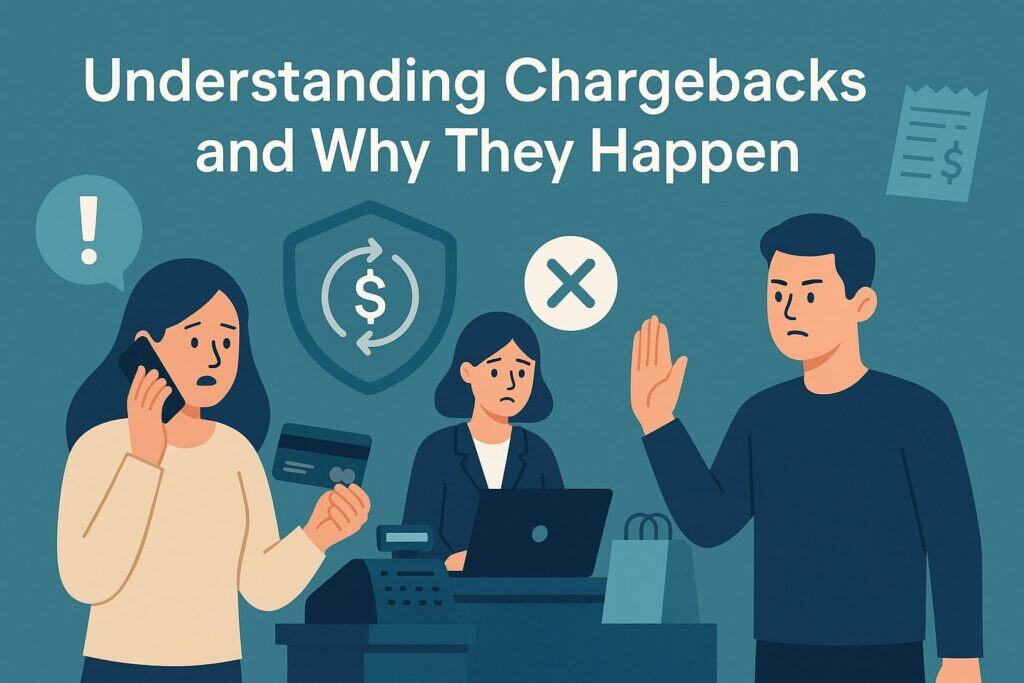
Before deciding whether you need chargeback insurance, it’s essential to understand what a chargeback actually is and why it occurs. A chargeback is a forced reversal of a card transaction initiated by the cardholder through their issuing bank.
Instead of contacting the business directly for a refund, the cardholder disputes the transaction with the bank. The bank then pulls the funds back from the merchant’s account and credits the cardholder.
Chargebacks can happen for many reasons. Some are legitimate, such as true criminal fraud where a stolen card was used without the cardholder’s knowledge. Others arise from merchant errors like duplicate billing, unclear product descriptions, or failure to cancel subscriptions after a customer request.
A growing portion, however, are due to “friendly fraud” or first-party misuse. In these cases, the cardholder (or a family member) actually made the purchase but later disputes it, sometimes due to confusion and sometimes intentionally to get something for free.
Every chargeback comes with direct financial losses beyond the refunded transaction. You lose the revenue, the product or service delivered, associated shipping or fulfillment costs, and you also pay a chargeback fee to your processor.
Too many chargebacks can increase your processing costs, push you into card network monitoring programs, or even get your merchant account terminated.
That’s why understanding chargeback drivers, monitoring dispute ratios, and controlling risk is a core part of modern payment management—and why products like chargeback insurance have become so relevant for businesses that sell online or via recurring billing.
What Is Chargeback Insurance?
Chargeback insurance is a financial protection product that reimburses your business when certain chargebacks occur. Instead of absorbing the full cost of a covered dispute, you file a claim with your chargeback insurance provider.
If the chargeback meets the policy’s eligibility criteria, the provider pays you back for the transaction amount and sometimes associated fees. In many cases, chargeback insurance is bundled with an advanced fraud solution, especially for card-not-present transactions.
At a basic level, chargeback insurance works like other forms of insurance: you pay a premium or per-transaction fee, and in return the insurer agrees to cover specific losses up to defined limits.
The premium is usually built into your payment processing fees or billed separately by a risk provider. Some programs only cover chargebacks tied to criminal fraud, while others may extend to friendly fraud and certain types of service-related disputes, depending on how the policy is written.
It’s important to distinguish chargeback insurance from chargeback guarantees offered by fraud prevention platforms. A chargeback guarantee typically means the fraud provider will reimburse you for transactions they approved that later result in fraud chargebacks.
In practice, this operates much like chargeback insurance, but the guarantee is tightly integrated with the provider’s fraud scoring engine and decisioning rules. Underwriting, pricing, and coverage terms can differ, but the shared goal is to transfer some chargeback risk away from your business and onto a specialized risk partner.
How Chargeback Insurance Works in Practice
In daily operations, chargeback insurance is woven into your payment flow and dispute handling process. Most merchants integrate a fraud or risk tool at the gateway or API level.
That tool evaluates each transaction in real time, using device data, behavioral analytics, previous history, and global fraud signals to determine whether a transaction should be approved, rejected, or flagged for review.
For transactions that are approved under the provider’s policy, chargeback insurance coverage attaches automatically.
When a chargeback comes in from the issuing bank, your processor notifies you and debits the funds. At this point, your chargeback insurance provider checks whether the transaction was covered.
They verify the dispute reason code, timing, and whether the transaction met the rules at the time of authorization. If it qualifies, they reimburse your business, often on a weekly or monthly basis. In some setups, they may directly credit your merchant account to offset the chargeback loss.
However, not every dispute is eligible. Many policies exclude chargebacks due to customer service issues, late delivery, or failure to honor a refund policy. They may also exclude high-risk verticals or specific regions known for elevated fraud.
Additionally, if the merchant bypassed risk settings or manually forced through a risky order, coverage can be denied. This is why it’s crucial to understand the fine print and work closely with your provider to configure risk thresholds that balance approval rates and protection.
When implemented thoughtfully, chargeback insurance can stabilize your dispute costs, protect your margins, and give you confidence to approve more legitimate orders without constant fear of fraud losses.
Types of Chargeback Insurance and Coverage Models
Not all chargeback insurance solutions are structured the same way. Understanding the main models will help you choose the right fit for your business profile and risk appetite. The most common type is fraud-only chargeback insurance.
In this model, the provider covers chargebacks that are clearly tied to unauthorized use of a card. These are usually disputes with fraud-related reason codes, such as “fraud – card-not-present” or “fraud – card present” depending on the network’s code set.
This model is most popular with eCommerce merchants who want to protect themselves from stolen card activity while still managing operational disputes in-house.
A second model is guaranteed fraud protection, often branded as a chargeback guarantee. Instead of reviewing individual claims after the fact, the provider guarantees that any transaction they approve under their fraud engine will be covered for fraud-related chargebacks.
Here, the focus is on real-time decisioning, liability transfer, and optimization of approval rates. Pricing may be a straightforward percentage markup on each approved transaction, reflecting the provider’s cost of absorbing fraud losses.
This model is used by many fast-growing merchants who prioritize frictionless checkout and want to safely maximize conversion.
There are also more comprehensive forms of chargeback insurance that may extend partial protection to friendly fraud, subscription disputes, or certain service complaints. These policies tend to be more complex and may involve higher premiums, detailed underwriting, and stricter operational requirements.
For example, a provider might require clear terms and conditions at checkout, robust customer support, and documented cancellation processes before agreeing to cover non-fraud disputes. While broader coverage sounds attractive, merchants must carefully balance the additional cost against their actual dispute patterns and the value of the added protection.
What Chargeback Insurance Typically Covers (and What It Doesn’t)
One of the most important steps when evaluating chargeback insurance is understanding the scope of coverage. In most cases, chargeback insurance covers the transaction amount for eligible chargebacks, and sometimes the associated processor fee or chargeback fee.
The core focus is on financial reimbursement for losses tied to specific dispute categories, usually fraud. The policy may cover all card brands you accept, or exclude certain networks or alternative payment methods.
What chargeback insurance usually does not cover are disputes tied to poor customer experience, misrepresentation, or violations of card brand rules. If customers file chargebacks because they didn’t receive a product, were charged after cancelling a subscription, or felt misled by your advertising, many insurers will deny coverage.
These disputes are seen as controllable through operational improvements rather than insurable risk. Similarly, if your dispute ratio exceeds card network thresholds, or if you are on a network monitoring program, some providers may limit or revoke coverage.
There may also be limits per transaction, per month, or per year. For high-ticket merchants, a policy might cap the maximum amount reimbursed per transaction.
For subscription or digital merchants with large volumes of micro-transactions, there could be aggregate limits over a billing period. It’s common for providers to exclude transactions that were manually overridden, bypassed risk rules, or were processed outside approved channels.
By thoroughly reviewing covered reason codes, limits, and exclusions, you ensure that your chargeback insurance performs as expected rather than leaving critical gaps in your risk strategy.
Benefits of Chargeback Insurance for Businesses
Businesses are increasingly turning to chargeback insurance because it offers concrete financial and operational benefits. The most obvious benefit is protection against unexpected loss.
When your revenue depends on card-not-present transactions, a sudden spike in fraud or friendly fraud can hit your cash flow hard. Chargeback insurance acts as a safety net, reimbursing covered losses so you can maintain predictable margins and budgeting.
This stability is especially valuable for small and midsize merchants that don’t have large reserves to absorb sudden dispute waves.
Another major benefit is the ability to confidently approve more legitimate orders. Without chargeback insurance, merchants often err on the side of caution and decline borderline transactions, especially from new customers or international locations.
While this lowers risk, it also suppresses revenue and can frustrate legitimate buyers. With the right insurance or guarantee model, you can rely on your provider’s fraud analytics and liability coverage, approving more orders that might otherwise be rejected. Over time, this can translate into meaningful increases in top-line revenue and customer growth.
Chargeback insurance also helps protect your merchant account health. Card networks monitor your dispute ratios, and crossing defined thresholds can lead to costly monitoring programs, fines, and even termination.
By offsetting financial losses on covered disputes and working with a provider that helps reduce fraud exposure, you lower your risk of breaching these thresholds. In many cases, insurers provide dashboards, alerts, and analytics that highlight root causes of disputes.
This visibility helps you refine your product descriptions, fulfillment practices, and refund policies. The result is a more resilient payments environment where risk is shared with a specialist partner and your team can focus on growth instead of constantly fighting chargebacks.
Risks, Limitations, and Common Misconceptions
Despite its advantages, chargeback insurance is not a magic shield against all disputes, and misunderstanding its limits can lead to costly surprises. One common misconception is that every chargeback will be covered once you sign up.
In reality, coverage is governed by exact policy language. If most of your disputes are due to cancellations, customer service issues, or recurring billing confusion, a fraud-only insurance policy will do little to reduce those losses.
Merchants sometimes discover this after a dispute surge, only to learn that their claims are denied because they fall outside eligible reason codes.
Another risk is over-reliance on insurance to solve operational problems. If you treat chargeback insurance as a replacement for good customer communication, clear terms, timely shipping, and responsive support, your dispute volume can continue to grow.
Even if some losses are reimbursed, high chargeback counts can still damage your processor relationships and network standing. Card brands care about dispute ratios, not just dollar amounts. Insurance doesn’t erase the fact that complaints are being filed.
Focusing solely on reimbursement without addressing underlying causes can lead to program termination or increased premiums.
There is also the risk of misalignment between your approval strategy and the insurer’s risk appetite. If your team is very aggressive in pursuing high-risk orders, but the provider is conservative in approving claims, you might find that many disputes are deemed ineligible.
Similarly, if your products fall into restricted categories, coverage could be capped or withdrawn. Pricing changes are another limitation—providers can raise fees if your risk profile worsens or if macro-level fraud trends shift.
For these reasons, it’s crucial to view chargeback insurance as one component of a broader risk management strategy rather than a standalone fix.
Chargeback Insurance vs. Chargeback Management Services
It’s easy to confuse chargeback insurance with general chargeback management services, but they address different parts of the problem. Chargeback management services typically focus on prevention and recovery rather than direct reimbursement.
They help you analyze dispute causes, implement best practices, respond to alerts, and build strong representation cases to fight invalid chargebacks. These providers might integrate with your CRM, support workflows, and order systems to collect evidence and respond to disputes within tight network deadlines.
Chargeback insurance, by contrast, is about transferring the financial risk of covered disputes to another party. While some insurers also offer prevention tools and representation services, their core promise is to reimburse you when certain chargebacks occur.
Many merchants choose to combine both approaches: they work with a chargeback management platform to reduce overall dispute volume and improve win rates, while also using chargeback insurance or a guarantee to protect against residual fraud losses that slip through.
When evaluating solutions, consider what your primary pain points are. If your dispute ratio is high due to operational issues and poor documentation, a strong management partner might deliver more benefit than insurance alone.
If your operations are solid but you’re still exposed to unpredictable fraud surges, adding chargeback insurance for high-risk segments could be the missing layer.
In practice, the most effective programs blend proactive dispute prevention, tactical representation, and smart risk transfer so that your business is protected from both frequent small disputes and rare but damaging fraud spikes.
How Much Does Chargeback Insurance Cost?
The cost of chargeback insurance depends on several factors, including your industry, ticket size, transaction volume, historical chargeback ratio, and the scope of coverage. Most providers use one of two primary pricing models.
The first is a percentage of transaction value, where you pay an added fee—often a few basis points—to cover eligible transactions. This fee may be blended into your overall processing rate or itemized on your statement.
The second model is a performance-based or tiered pricing structure, where rates adjust based on your actual dispute levels and risk profile over time.
High-risk merchants, such as digital goods, online gaming, or recurring subscription services, generally pay more due to elevated fraud and friendly fraud exposure.
Merchants in lower-risk segments with strong fraud controls and clean chargeback histories may qualify for more favorable rates. Policy design also affects pricing.
A fraud-only chargeback insurance policy is usually cheaper than one that extends partial coverage to friendly fraud or service-related disputes. Caps, deductibles, and minimum volume commitments also come into play. Some providers may require a minimum monthly spend or charge setup and integration fees.
When comparing costs, it’s important to consider the full economic impact, not just the headline fee. Insurance may allow you to safely increase approval rates, leading to higher revenue. It can also reduce variance in your dispute-related losses, making it easier to forecast profitability.
On the other hand, if your dispute volume is already low, the additional cost might outweigh the financial benefit. Running scenario analyses—projecting different chargeback rates and coverage levels—helps you determine whether chargeback insurance will improve your bottom line or simply add another line item to your payment stack without substantial ROI.
Who Should Consider Chargeback Insurance (and Who Shouldn’t)?
Not every business needs chargeback insurance, but for certain profiles it can be game-changing. Merchants that rely heavily on card-not-present payments, especially for digital goods, subscriptions, or on-demand services, tend to see higher chargeback rates.
If your business model involves instant access to content, trial offers, or recurring billing, friendly fraud and misunderstandings are often unavoidable. In these scenarios, chargeback insurance can provide a critical buffer against unpredictable fraud trends and customer behavior.
High-growth businesses are another strong candidate. When you’re scaling quickly, expanding into new markets, and onboarding new customers, it’s harder to finely tune risk settings without accidentally blocking legitimate sales.
Instead of holding growth back out of fear, many merchants use chargeback insurance as a strategic tool to support aggressive expansion while keeping losses within defined boundaries. This is particularly valuable if you’re entering regions with higher fraud risk or launching high-value products that could attract fraudsters.
On the other hand, businesses with low card-not-present exposure, strong in-person sales, and consistently low dispute rates may not need chargeback insurance. If you mostly sell to repeat customers, maintain excellent communication, and rarely see fraud, adding an insurance layer could be unnecessary.
For these merchants, investing in basic fraud tools, customer education, and clean billing descriptors often delivers sufficient protection. Ultimately, the decision should be guided by your real dispute data, risk tolerance, and growth strategy, rather than a one-size-fits-all assumption that every merchant must carry chargeback insurance.
Key Factors When Choosing a Chargeback Insurance Provider
Choosing the right chargeback insurance provider requires more than just comparing price quotes. One of the first factors to review is the provider’s specialization. Do they focus on your industry or have deep experience with similar business models?
A provider with strong expertise in your vertical is more likely to understand your risk patterns, seasonal peaks, and specific dispute drivers. This translates into more accurate underwriting, fairer pricing, and risk tools that align with your real-world challenges.
Next, examine the scope of coverage in detail. Look at which card brands and payment methods are covered, which dispute reason codes are eligible, and how claims are processed. Ask how often claims are denied and why.
Understand any caps, deductibles, or volume minimums. You should also look at how the provider integrates with your existing payment stack—gateway, processor, CRM, and order management systems.
A provider that offers robust APIs, sandbox environments, and dedicated onboarding support can reduce implementation friction and ongoing maintenance work for your teams.
Service quality is another critical dimension. Evaluate the provider’s reporting tools, dashboards, and analytics. Do they give you clear visibility into covered transactions, chargeback trends, and claim outcomes? Is customer support responsive, and do they provide a dedicated account manager?
Since chargeback insurance touches both your financial results and customer experience, you want a partner that collaborates with you on continuous improvement.
Finally, review contract terms around pricing changes, termination, and data ownership. A transparent provider will explain how your risk data is used and how you can exit the relationship if it no longer meets your needs.
How Chargeback Insurance Fits into a Broader Risk Strategy
To get the most value from chargeback insurance, it should be part of a layered risk strategy rather than a standalone tool. A comprehensive approach starts with basic hygiene: clear checkout flows, accurate product descriptions, visible return policies, and simple ways for customers to contact support.
Many disputes arise because customers don’t recognize a charge, don’t understand subscription terms, or feel they have no easy way to resolve issues with you directly. Fixing these pain points reduces chargeback volume at the source.
On top of this, merchants typically deploy fraud prevention tools such as address verification (AVS), card security code checks (CVV/CVC), 3-D Secure where appropriate, device fingerprinting, and behavioral analytics.
These tools help block high-risk transactions before they turn into costly disputes. Chargeback alerts and order-level monitoring add another layer, allowing you to issue refunds or resolve issues before chargebacks are filed. Representment capabilities help you fight invalid disputes and reclaim revenue when you have strong evidence.
Within this framework, chargeback insurance acts as the final layer of defense. It covers the residual losses that slip through even a well-designed risk stack, especially for fraud or friendly fraud that’s hard to detect in real time.
By combining prevention, early warning, dispute response, and risk transfer, you create a resilient ecosystem where no single tool has to do all the work. This layered approach not only keeps losses in check but also gives you the flexibility to adjust individual components as business conditions and fraud patterns evolve.
Future Trends: The Evolving Landscape of Chargeback Insurance
The world of chargeback insurance is evolving alongside changes in payments, regulation, and fraud behavior. One major trend is the increasing use of artificial intelligence and machine learning to price risk and identify disputable transactions before they occur.
As fraudsters use more sophisticated tactics—such as synthetic identities, account takeover, and automated scripts—insurance providers are investing heavily in data science and consortium-level intelligence to stay ahead. Merchants benefit from more accurate approvals, fewer false declines, and more predictable coverage.
Another trend is the growing attention on first-party misuse and friendly fraud. As more purchases move online and cardholders become familiar with dispute processes, some consumers misuse chargebacks as a customer service shortcut or a way to get free products.
Card networks and regulators are watching this trend, and we can expect future policy changes, tools, and liability shifts aimed at reducing abuse.
Some insurance products are beginning to incorporate first-party misuse into their models, either through partial coverage or combined analytics and education designed to reduce these disputes. Merchants should monitor how their own dispute mix evolves and discuss potential coverage for friendly fraud with providers.
Looking ahead, chargeback insurance may become more tailored, with dynamic pricing by segment, channel, or customer risk tier. Embedded insurance models—where coverage is automatically bundled within broader payment or platform offerings—are also likely to grow.
Marketplaces, SaaS platforms, and payment facilitators may increasingly offer baked-in chargeback protection to their sub-merchants, using pooled data to optimize risk.
Merchants who stay informed about these developments will be better positioned to renegotiate terms, adopt new coverage models, and ensure their risk strategy keeps pace with changing technology, consumer behavior, and regulatory expectations.
Practical Steps to Implement Chargeback Insurance
If you’ve decided that chargeback insurance might be a good fit, a structured implementation plan will help you get the most from the investment. Start by gathering your internal data: recent chargeback counts, reasons, dispute ratios by processor, and the financial impact per month.
Break down disputes by product type, channel, geography, and customer segment. This analysis gives you a clear baseline and helps you articulate your needs when talking to providers. It also helps you spot operational issues that you should fix regardless of insurance.
Next, build a shortlist of providers based on recommendations, industry references, and compatibility with your existing payment stack. During discovery calls, ask pointed questions about coverage, exclusions, reporting, onboarding requirements, and support.
Request a proof-of-concept or pilot where the provider can analyze historical data and simulate how their chargeback insurance would have performed over a past period. This exercise can reveal whether the solution would have meaningfully reduced your net dispute losses and how it might impact your approval rates.
Once you select a provider, work together on integration and configuration. This typically involves adding fraud or risk checks to your checkout flow, setting approval thresholds, and testing end-to-end flows in a sandbox environment.
Align internally across finance, operations, and customer support so everyone understands how coverage works, how to interpret reports, and how to handle customer communications about disputes.
After launch, monitor results closely for the first few months, comparing dispute trends, approval rates, and net losses to your pre-implementation baseline. Use these insights to refine rules and collaborate with your provider on ongoing optimization.
FAQs
Q1. Is chargeback insurance the same as fraud protection?
Answer: No. Fraud protection tools help prevent suspicious transactions from being approved, while chargeback insurance reimburses you for certain losses when covered disputes still occur.
Many modern providers bundle both, using advanced analytics for prevention and an insurance-style guarantee for approved transactions that become fraud chargebacks.
Q2. Will chargeback insurance cover friendly fraud or first-party misuse?
Answer: It depends on the policy. Many programs focus on criminal fraud disputes, not cases where the cardholder or a family member actually made the purchase and later claims otherwise.
However, some providers are starting to offer limited coverage or specialized programs aimed at friendly fraud. Always review the exact dispute reason codes and conditions that are eligible for reimbursement.
Q3. Does chargeback insurance affect my dispute ratio with card networks?
Answer: Insurance reimburses your financial loss but does not erase the fact that a chargeback occurred. Card networks still count disputes toward your ratios.
That’s why chargeback insurance should be combined with strong prevention, customer communication, and representation practices. Reducing the number of disputes is still essential, even if some losses are reimbursed.
Q4. How do I know if chargeback insurance is worth the cost?
Answer: Run the numbers using your own data. Look at your average monthly chargeback losses, including lost revenue, product cost, and fees. Compare that to the expected cost of coverage based on your processing volume and quoted rates.
Factor in potential revenue lift from higher approval rates. If the projected net benefit is positive and aligns with your risk tolerance, chargeback insurance may be a good investment.
Q5. Can small businesses get chargeback insurance, or is it only for large enterprises?
Answer: Many providers serve small and midsize merchants, especially in eCommerce, digital goods, and subscription services. Some payment processors and gateways even offer built-in chargeback insurance or guarantees as an add-on service.
Smaller businesses should pay close attention to minimum fees, volume commitments, and the simplicity of integration, but the concept is accessible beyond big enterprises.
Q6. Is chargeback insurance a substitute for good customer service and clear policies?
Answer: No. Even with robust chargeback insurance, you still need clear product descriptions, transparent billing practices, easy cancellation, and responsive support. Many disputes stem from misunderstanding or frustration rather than pure fraud.
Insurance can offset some financial losses, but it can’t repair a damaged reputation or undo card network concerns about high dispute counts.
Conclusion
Chargeback insurance has emerged as a powerful tool for businesses navigating the risks of modern electronic payments. As fraud tactics evolve and consumer expectations rise, the ability to stabilize dispute-related losses and confidently approve more legitimate orders is invaluable.
When thoughtfully selected and implemented, chargeback insurance can protect your margins, support growth, and complement a layered risk strategy that includes prevention, alerts, and expert dispute management.
However, it’s not a universal requirement or a one-click solution. The value of chargeback insurance depends on your dispute profile, operating model, and growth goals.
Businesses with significant card-not-present exposure, high growth ambitions, or volatile fraud trends are most likely to benefit. Merchants with low dispute levels and strong operational controls may find more value in continued optimization of their existing processes and basic fraud tools.
Ultimately, the decision comes down to data and strategy. By analyzing your chargebacks, understanding coverage models, and evaluating providers through the lens of your specific risks, you can decide if chargeback insurance is an essential safeguard or an optional enhancement.
Whichever path you choose, staying proactive about disputes—through prevention, customer experience, and smart risk transfer—will position your business to thrive in a payment environment where chargebacks are an ongoing reality rather than an occasional exception.